
Starting an LLC in California: Everything You Need to Know
Content Updated
Updated:01:08:2025
Posted:01:08:2025

California is expensive, crowded, and full of red tape. And yet, it’s still one of the best places to start a business. Why? California is a place of innovation and ambition. It’s where ideas get big: Apple, Disney, and Netflix all started here. If you’ve got a dream, a side hustle, or just a good idea you’re ready to bring to life, learning how to form an LLC in California is a smart move.
A California LLC (Limited Liability Company) is a business structure that protects your personal assets while offering tax benefits. And while California does have more rules (and fees) than some other states, the process is completely manageable if you know what to expect. This guide walks you through exactly how to get an LLC in California, so you can navigate the traffic with fewer detours as you launch your business.
Why Start an LLC in California?
Yes, California is more expensive than states like Texas or Florida. But the opportunities are just as big as the costs. Here are some of the highlights:
- Strong industry networks. California leads in tech, entertainment, clean energy, and more. It’s a place where you can connect and grow your business.
- Talent and investors. Startups here attract top talent and active investors.
- Local credibility. The California market is competitive. Having an LLC shows banks and investors that you’re serious.
- Large and diverse population. Reach millions of potential customers from every walk of life.
- Economic power. California ranks as the fifth-largest economy in the world. You’re building in a state with real momentum.
So, while California LLC registration is notoriously complex, don’t let that stop you. From topics like “How much is an LLC in California?” to “How to close an LLC in California”, we’ll walk you through it step by step.
How to Start an LLC in California: A Step-by-Step Guide
Let’s get into the details of how to create an LLC in California so you can stay compliant and focus on bringing your ideas to life.
Step 1: Choose Your California LLC Structure
Before you file any paperwork, it’s important to decide how you want your LLC to be structured. This includes choosing the number of members (owners) and how the business will be managed. One key consideration is individual vs. company ownership. LLC members can be individuals, corporations, or even other LLCs. Here’s an overview of the options:
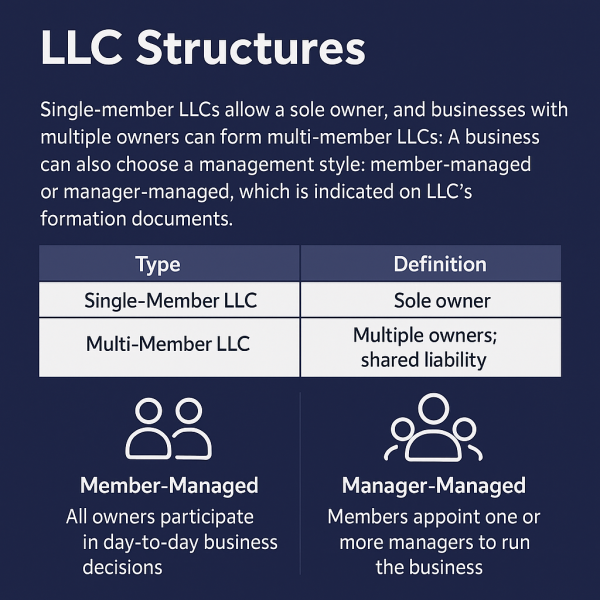
Your structure affects your taxes, liability, and how the business runs. Take some time to figure out which structure best fits your long-term goals.
You’ll also want to start thinking about how you want your LLC to be taxed. By default, LLCs in California are taxed as pass-through entities. That means the business itself doesn’t pay federal income tax. Instead, profits are passed through to the members and reported on their personal tax returns. But you can also opt for corporate taxation. Here’s a quick comparison:

You don’t need to finalize your tax classification now, but having it in mind can help you make more strategic decisions as you go.
💡See any terms you’re not familiar with? Check out our Glossary to get common business jargon clearly explained.
Step 2: Choose a Name for Your CA LLC
Creatively, you might already have the perfect name. But legally, it needs to meet California’s LLC naming rules:
- Must include a Limited Liability Company identifier (LLC, L.L.C., Ltd. Liability Company, etc.)
- Must be a unique name that is easily distinguishable from other registered names
- Cannot include misleading or restricted words
- Can only use English letters and Arabic numerals (0-9)
Use the Secretary of State’s Business Search database to check name availability.
If you’re not ready to register your LLC yet, you can reserve your name for 60 days with the option to renew (with a one-day gap in between). Just file the Name Reservation Request and pay the $10 fee online via BizFile, or submit it by mail or in person at the California Secretary of State’s office. With a name locked down, you’re ready for the next step.
Step 3: Appoint a Registered Agent in California
A registered agent is your LLC’s official contact for legal documents. California requires every LLC to have one to ensure proper service of process (the official delivery of legal documents), especially if your business is involved in a legal matter.
You can appoint yourself, someone you trust, or hire a professional registered agent service. However, they must meet the following requirements:
- Be a California resident or company authorized to do business in the state
- Have a California address (no P.O. boxes)
- Be available during normal business hours
Note: While it may seem easier or cheaper to appoint yourself, using a professional service can help protect your privacy and ensure nothing slips through the cracks. Keep in mind that registered agent information is public information, and agents must be physically present at the listed address during normal business hours.
Once you’ve secured a registered agent, you’re ready to make your LLC official by filing the correct paperwork.
Filing fee: $125 ($100 filing fee + $25 registered agent designation)
Optional: $30 for a certified copy or $5 for a Certificate of Status
Processing time: About 1-2 business days online
Once approved, your LLC is official, and you’ll receive a Florida LLC document number. Make sure to save this number because you’ll need it for future filings and other compliance tasks.
Step 4: File Articles of Organization (Form LLC-1)
Filing your Articles of Organization California (also known as the Certificate of Formation in some other states) is the official step that legally creates your California LLC. This form requests basic details about your business, such as the name, address, registered agent information, and management structure.
Here’s what you need to know:
- How to file: You can file Form LLC-1 online through the Secretary of State’s BizFile portal, by mail, or in person. The Secretary of State no longer provides a downloadable version of the form on their website, so if any changes are made in the future, filing online may be the most reliable option.
- Filing fee: $70 (one-time).
- Processing time: About 8 business days (online)
Once the state approves your Articles of Organization, your LLC is officially up and running! Keep a copy for your records as you’ll need it for opening business accounts and applying for licenses. Now, you’ll want to focus on laying the ground rules for your LLC to keep everything running smoothly behind the scenes.
Step 5: Create an Operating Agreement
While not required by the state, an operating agreement is a smart move for any LLC. Think of it as your business’s rulebook. It lays out how your LLC will be run, how decisions are made, and what happens if a member leaves or the company shuts down. Even if you’re a single-member LLC, this document confirms that your LLC is legally separate from you personally, helping protect your assets. It also shows banks and investors your business is legal and you’re serious about it. Here’s what your operating agreement should cover, with examples to help shape your own:
- Ownership structure and member roles
Example: A 50/50 split between two co-owners, or adjust percentages based on how much each contributes.
- Voting rights and decision-making processes
Example: Everyday decisions need a majority vote, but bigger ones require a unanimous decision.
- Profit and loss distribution
Example: Profits could be shared equally or depending on how much each person puts in.
- Procedures for adding or removing members
Example: Requiring written approval from current members before bringing a new partner in or buying someone out.
- What happens if the business closes
Example: Assets will go towards paying off debts first, then split among the members.
As you can see, even though the operating agreement doesn’t need to be filed with the state, it’s an important step for keeping your LLC legally protected. Be sure to keep a signed copy with your other business records.
Now, you’re ready to take care of the paperwork you’ll need at the federal level: getting your EIN.
Step 6: Get an EIN from the IRS
An EIN, or Employer Identification Number, is issued by the IRS to identify your business for tax purposes. It’s also known as a Tax ID number.
Here are some of the essential business tasks you’ll need an EIN for:
- Setting up your LLC’s banking accounts
- Filing and paying taxes
- Hiring employees
- Applying for licenses and permits
Luckily, it’s free and only takes a few minutes to apply through the IRS website. You can also apply by mail or fax using Form SS-4. Just keep in mind, it may take longer. Once you’ve got your EIN, your next move is to complete a few more key steps to keep your LLC in good standing.
Note: If you plan to hire employees, it’s generally recommended to do so in the same state where your LLC is registered. This helps avoid complications with taxes and state labor laws.
Step 7: File Initial Statement of Information (Form LLC-12)
California requires LLCs to file an Initial Statement of Information using Form LLC-12 within 90 days of establishment. This form keeps the state updated with your LLC’s key information:
- Name and Secretary of State file number
- Business address
- Registered agent details
- Names and addresses of LLC members
- A description of your business activity
You can file online through BizFile, by mail, or in person. The filing fee is $20. After the initial filing, you’ll need to submit an updated Statement of Information every two years, even if nothing changes. Let’s take a closer look at what else you need to do to keep your LLC compliant in California.
Don’t Lose Your LLC: California Compliance Made Simple
Tax Requirements for California LLCs
Your tax obligations depend on how your LLC is structured and taxed, but here are the key California-specific requirements for all LLCs:
- Annual Franchise Tax. Even if your LLC doesn’t earn any income, California requires a yearly franchise tax of $800. It’s due by the 15th day of the fourth month after your LLC is formed. A common question is: “Do you have to pay the $800 California LLC fee the first year?” This confusion comes from a first-year exemption that applied to LLCs formed between 2021 and 2023. That exemption has ended, and all new LLCs are required to pay even in the first year. So, be sure to factor in this $800 tax into your startup budget.
- Gross Receipts Fee. If your LLC earns over $250,000 in a year, you’ll owe an additional LLC fee starting at $900 and scaling up based on your total revenue.
- California State Income Tax. Since profits pass through to your personal tax return, you’ll pay state income tax on your share of the LLC, based on California’s tax brackets.
- Sales Tax. If your business sells physical goods or taxable services, you’ll need to register for a seller’s permit (more on this later) and report sales tax regularly to the California Department of Tax and Fee Administration (CDFTA).
- Local Taxes. Some cities and counties have additional local taxes. Make sure to check with your city or county tax office to understand your specific responsibilities.
- Industry-Specific Taxes. Certain industries (e.g., auto repair, catering) have special tax rules or additional fees. Review the CDTFA’s Industry & Tax and Fee Guides to confirm what applies to your business.
- Payroll Taxes. If your LLC has employees, you’ll need to withhold and submit payroll taxes. This includes unemployment insurance, disability insurance, and employment training taxes. Learn more and file through the Employment Development Department (EDD).
- Federal Taxes. LLCs are also pass-through entities for federal taxes, meaning profits are reported on your personal return. To maintain federal compliance, you’ll need to file and pay these taxes accordingly (unless you choose to be taxed as a corporation).
Tax compliance can get complex. While it’s not impossible to handle on your own, working with a tax professional can help you stay on top of things and free up time to focus on growing your business.
What Licenses and Permits Does Your California LLC Need?
This will depend on where your business is and what kind of business you run. Here are some of the main ones to consider:
- Local business license. California doesn’t require a general business license, but most cities and counties have their own. Check with your local city or county office to apply.
- Seller’s permit. This allows you to collect and report sales tax. If you sell physical goods or taxable services, you’ll need to apply for a seller’s permit with the CDFTA.
- Professional license. Certain industries, like contractors, cosmetologists, or accountants, require additional licenses from the relevant board or agency.
- Workers’ comp insurance. California law requires you to carry workers’ compensation insurance, even if you only have one employee.
Here’s a quick overview of what to look out for in some of California’s main counties:
After all the work of forming your LLC, the last thing you want is to lose it over missed paperwork. In California, staying compliant means updating your business information, renewing required licenses, and keeping up with taxes. Here’s what you need to know.
County | Common Local Requirements | Where to Check |
Los Angeles | Business license required for most businesses Zoning clearance | |
San Diego | Local business license known as a Business Tax Certificate required Some cities may require additional licenses | |
San Francisco | Must register with the SF Office of the Treasurer & Tax Collector Additional gross receipts taxes on top of state requirements | |
Orange | Business licenses and zoning clearance vary by city | |
Riverside | Business licenses and zoning clearance vary by city | |
Alameda | Depending on the city (e.g., Oakland, Berkeley), Business Tax Certificate and additional permits required | |
Sacramento | Doing Business As (DBA) filing Local license required for most businesses | Sacramento County |
Fresno | Local licenses required by city Home-based businesses have additional zoning rules | Fresno County Business License |
For more detailed guidance, use the state’s CalGOLD website to figure out exactly which licenses, permits, and regulations apply to your business.
General Tips
As you may have picked up on by now, it’s actually staying compliant as an LLC in California that’s complicated. Keep these general tips in mind to make sure you stay on track:
- File Statement of Information. Even if your information stays the same, you need to file every 2 years after your initial filing.
- Update business details. Any time you change your address, agent, or other key details, you’ll need to file the correct forms with the Secretary of State as soon as possible.
- Maintain records. Keep all your important business documents organized. You’ll need them for things like applying for loans, audits, and more. Also, be sure to mark your calendar with deadlines for license renewals and tax forms.
And with that, you’re all set to keep your business running on track legally. But if you ever need to close up shop, there’s also a right way to dissolve your LLC.
How to Dissolve an LLC in California
The process is much simpler than starting an LLC, but you still want to make sure you do it correctly to avoid ongoing taxes and fees.
- File the Correct Form
The right form depends on whether your LLC has conducted business or has any debts. File Form LLC-4/8 (Short Form Certificate of Cancellation) and/or Form LLC-3 (Certificate of Dissolution). See the Secretary of State’s guidelines for which form to file.
- Handle Final Taxes
File your final state and federal tax returns. Make sure to check the “Final Return” box when filing.
- Close Accounts
There are a lot of moving parts involved in keeping your LLC running. To avoid ongoing fees, cancel all licenses and permits and notify local tax offices and vendors.
And if you ever decide to start another venture down the line, properly closing your LLC keeps your record clean. Now that you’re ready to form your California LLC, we’ve pulled together all the tips, tools, and templates you’ll need in one place.
Tools, Templates, and Final Tips Before You Create an LLC in California
There are a lot of moving parts to forming and maintaining an LLC in California, but you don’t have to keep it all in your head. Use this section as your go-to toolkit:
- How to Get an LLC in California: A Complete Checklist
- How to Maintain Your California LLC
- California LLC Costs
- Form LLC-1- Articles of Organization
- Form LLC-12- Statement of Information
- Name Reservation Request
- Form 568- LLC Return of Income
- Form SS-4- Application for Employer Identification Number
- FTB Form 3522- LLC Tax Voucher
- FTC Form 3536- Estimated Fee for LLCs
- FTC Form 100- CA Corporation Franchise or Income Tax Return
- FTC Form 100S- CA S Corporation or Income Tax Return
- Form LLC-3- Certificate of Dissolution
- Form LLC-4/7- Certificate of Cancellation
- Form LLC-4/8- Short Form Cancellation Certificate
While it’s possible to form an LLC on your own, don’t hesitate to ask for professional help. Whether it’s for taxes, compliance, or legal questions, getting support early can save you time, money, and stress. With the right tools and a clear roadmap we’ve shared here, forming your LLC in California is completely doable. Congrats on taking a big step toward building the business you envision.